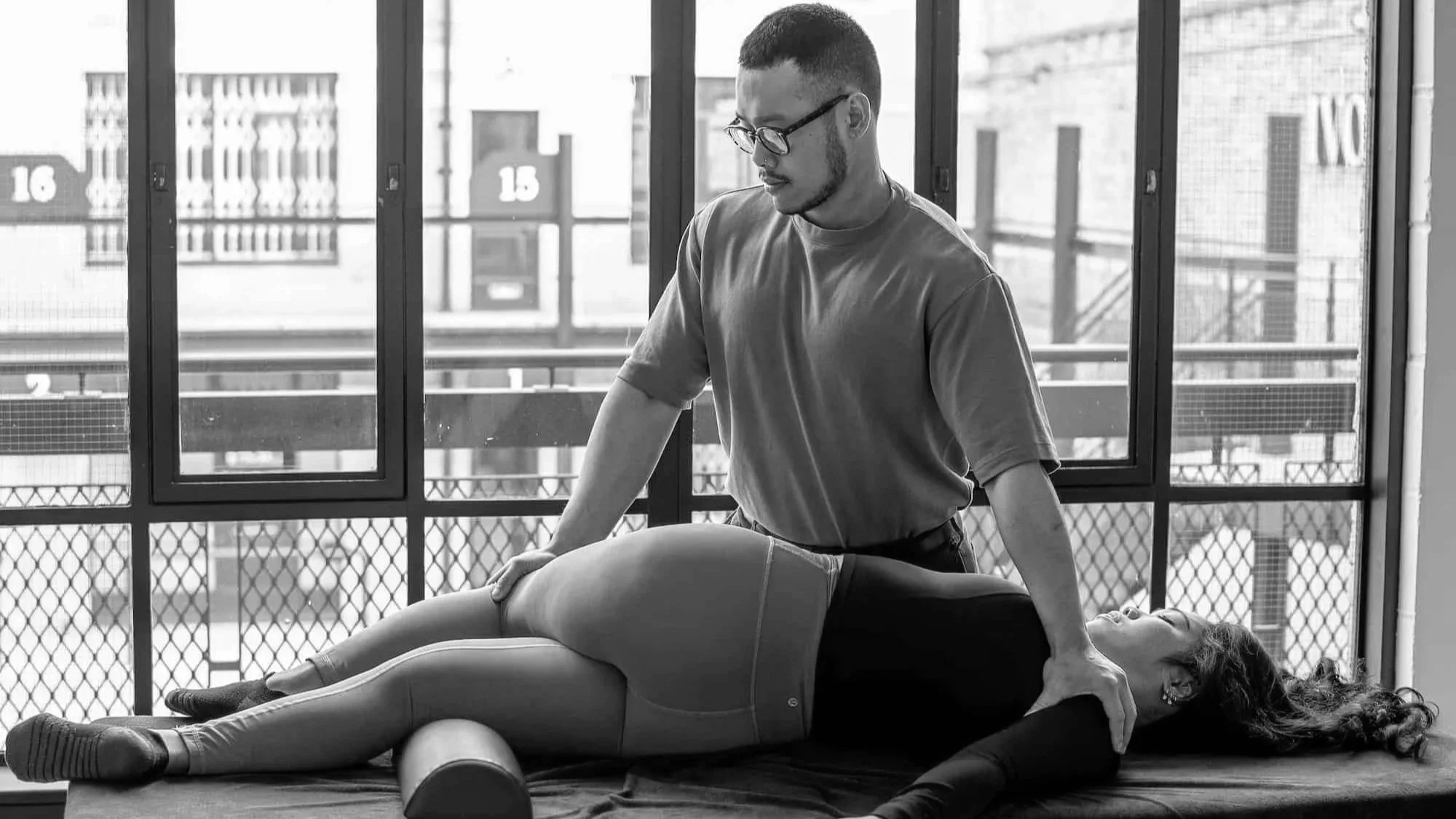
Assisted stretching in London
Assisted stretching is a guided, hands on approach to improving mobility, flexibility, and movement quality. Delivered by experienced personal trainers and therapists, each session is tailored to how your body moves, where restrictions exist, and what you need to perform and feel better.
This is not passive stretching or relaxation based treatment. Assisted stretching is a structured, evidence informed service designed to support training, reduce discomfort, and restore efficient movement.
What is assisted stretching
Assisted stretching involves a practitioner guiding your body through controlled stretches that are difficult or impossible to achieve alone. By applying precise positioning, timing, and resistance, we are able to improve joint range of motion, reduce muscle stiffness, and address movement restrictions more effectively than self stretching.
Sessions are delivered by a qualified assisted stretching personal trainer who understands biomechanics, training load, and injury considerations.
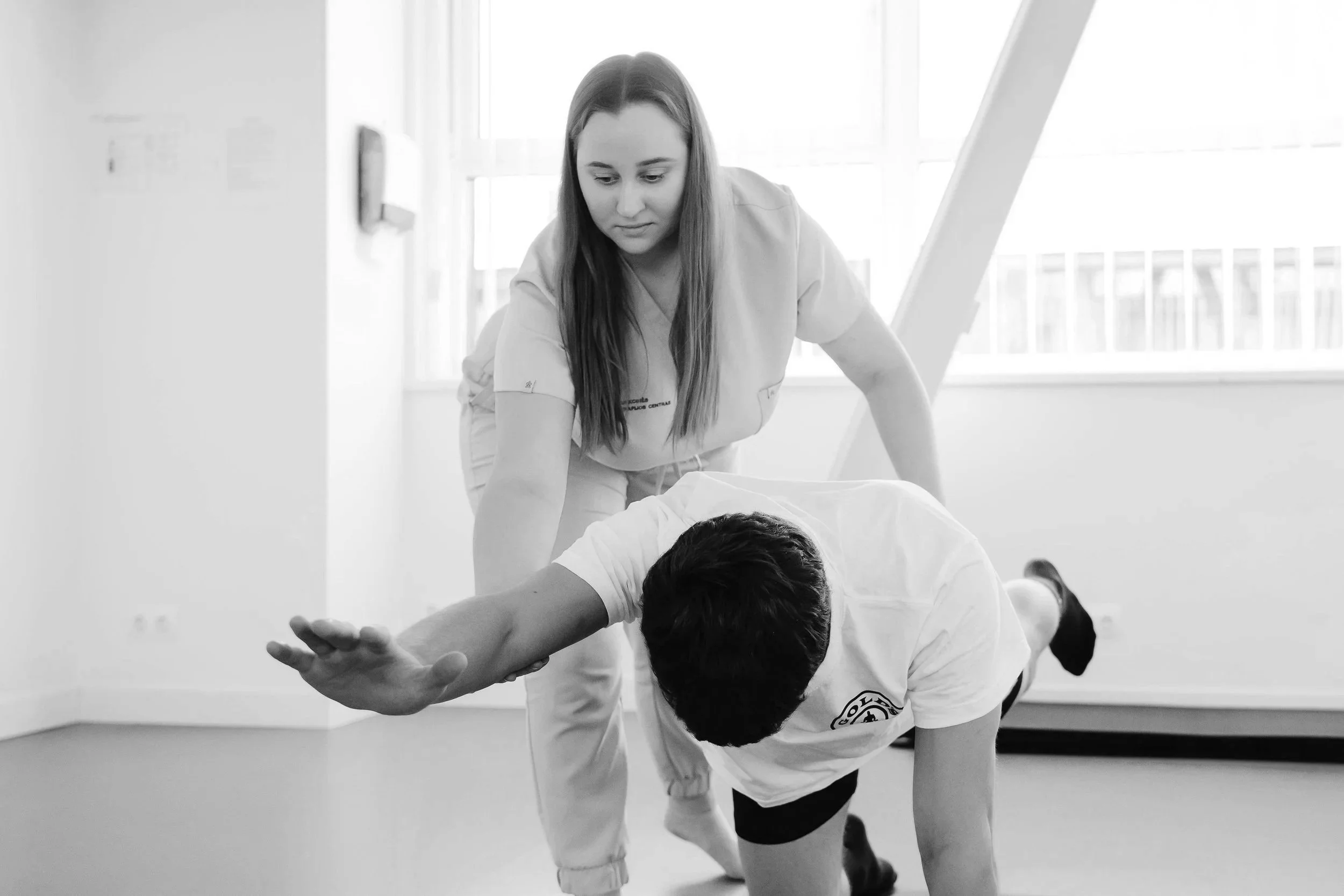
Benefits of assisted stretching
Regular assisted stretching can help improve joint range of motion and flexibility, reduce muscle tightness and movement restriction, and support recovery between training sessions. Over time, it can also improve posture and movement efficiency, reduce recurring aches related to stiffness or overuse, and enhance performance in strength training and sport. Unlike generic stretching routines, assisted stretching is targeted, progressive, and continuously adjusted based on how your body responds.
Who assisted stretching is for
Assisted stretching is suitable for individuals who feel stiff, restricted, or limited in their movement, as well as for clients who train regularly and want to improve recovery and performance. It is particularly beneficial for desk based professionals experiencing postural tightness, people returning to training after injury or time off, and anyone who has struggled to achieve meaningful results with self directed stretching exercises.
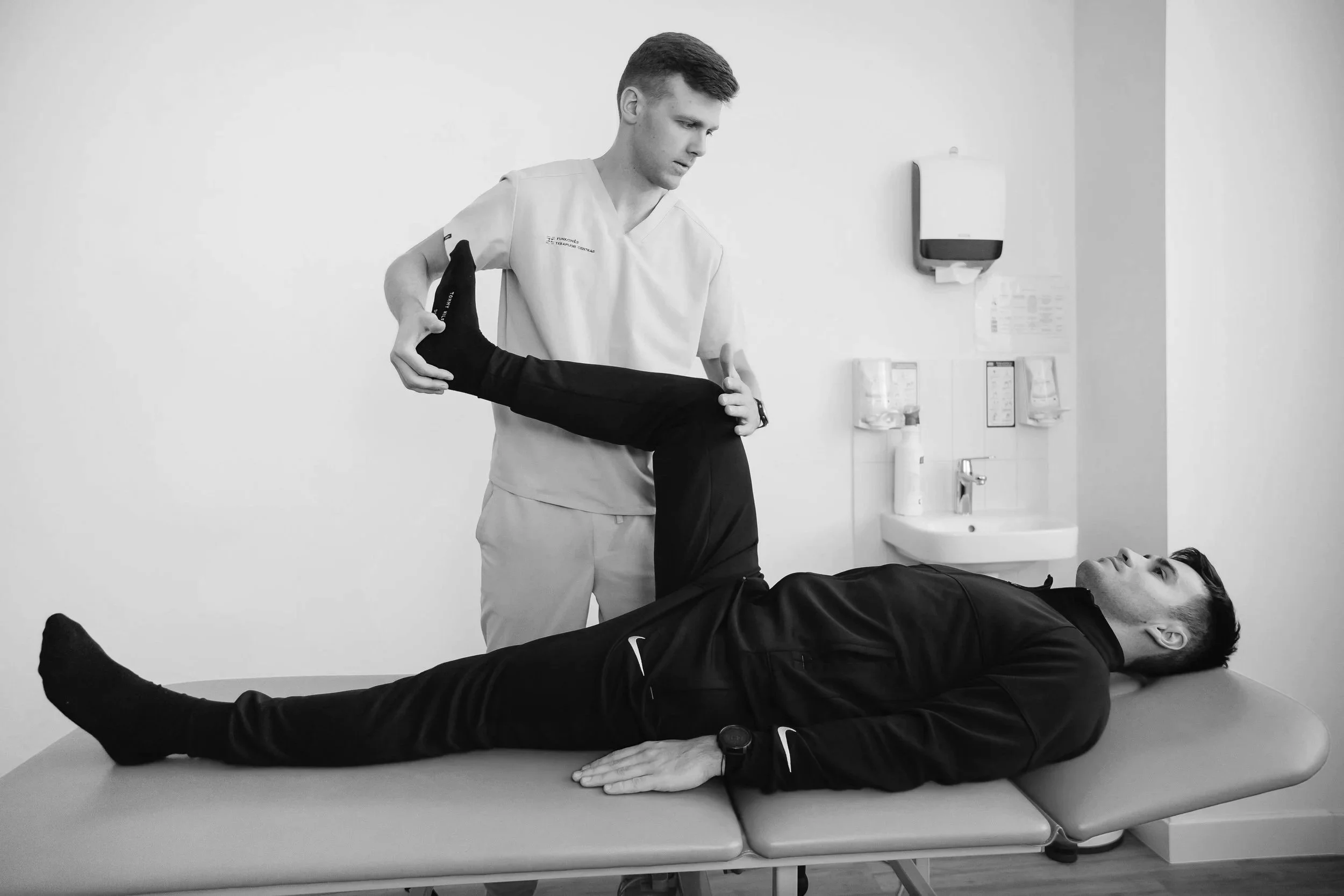
Who it is not for…
Assisted stretching may not be appropriate during acute injury or where medical assessment is required. Suitability is always confirmed during your initial assessment.
How assisted stretching works
Each session begins with a brief assessment to identify restricted muscles, joints, and movement patterns. From there, your practitioner applies specific assisted stretching techniques tailored to your needs.
You remain relaxed while the practitioner guides your body through controlled ranges, adjusting pressure, direction, and intensity to ensure safety and effectiveness.
Progress is reviewed over time to ensure improvements in mobility translate into better movement and training outcomes.
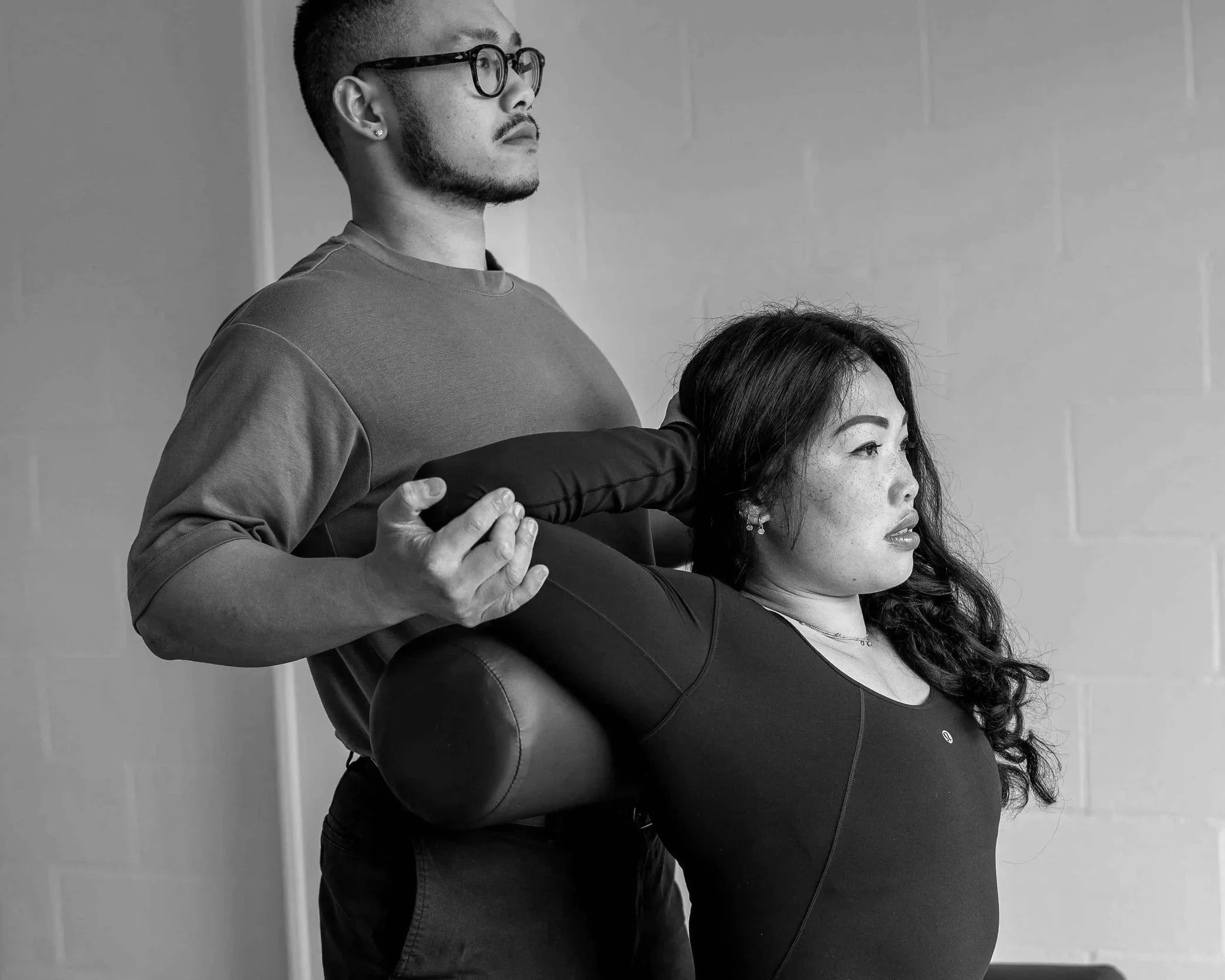
Assisted stretching techniques ❊
Proprioceptive neuromuscular facilitation (PNF)
This technique combines gentle muscle activation with assisted stretching to improve range of motion and neuromuscular control. It is commonly used to achieve lasting flexibility gains.
The practitioner guides your body through controlled ranges while you remain relaxed. This allows for deeper, more precise stretches than self stretching and is useful for reducing general stiffness and preparing the body for movement.
Passive assisted stretching
Active assisted stretching blends guided movement with your own muscular engagement. This helps reinforce control and stability within new ranges, making flexibility gains more transferable to training and everyday movement.
Active assisted stretching
A neuromuscular stretching technique where contracting the opposing (agonist) muscle causes the target (antagonist) muscle to relax, allowing a more effective stretch.
Reciprocal inhibition (RI)
What results can you
expect
While individual outcomes vary, clients typically experience:
Clients can expect noticeable improvements in strength within the first four to six weeks, followed by visible body composition changes between weeks eight and twelve. Alongside physical progress, most experience greater confidence in training and movement, reduced training related aches and discomfort, and a clearer understanding of how to train effectively for the long term. We do not promise unrealistic transformations. We focus on building sustainable, maintainable results that continue beyond the programme.
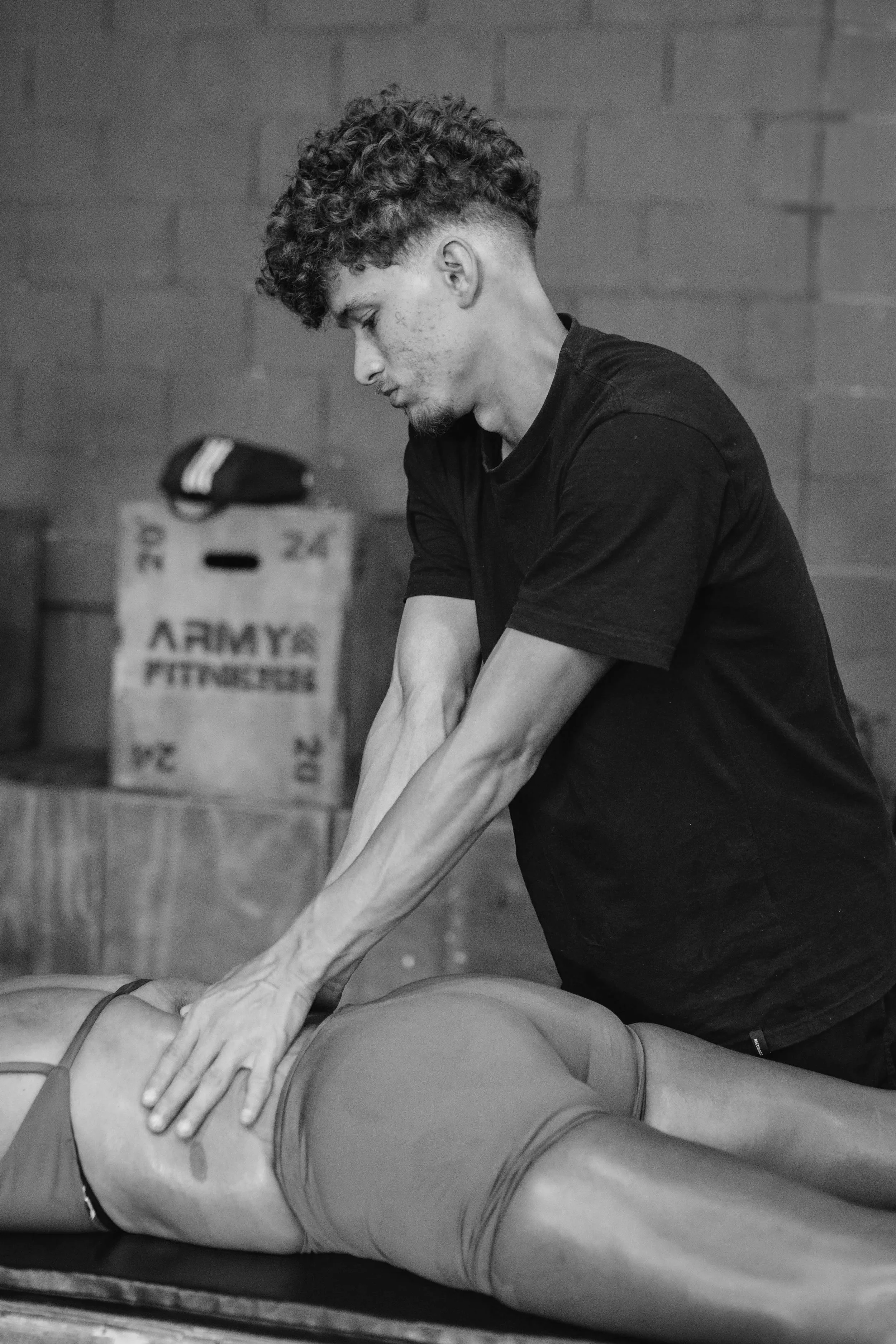
If tightness persists after assisted stretching, sports massage may be the better option.
FAQs
Is assisted stretching the same as massage
No. Assisted stretching focuses on guided movement and joint range rather than soft tissue pressure. It is active and movement led rather than passive.
How often should I book assisted stretching
Frequency depends on your goals. Some clients benefit from weekly sessions, while others integrate assisted stretching alongside training as needed.
Do I need to be flexible already
No. Assisted stretching is particularly effective for people who feel stiff or restricted and struggle with traditional stretching exercises.
What happens after the 12 weeks
Assisted stretching can reduce discomfort related to stiffness or poor movement patterns. Pain is always assessed to ensure stretching is appropriate.